
Quick start
Connect2id server requirements
 |
2 GB of RAM If you expect to service more than 100 thousand users the server will benefit from additional memory. |
 |
Java 21 or 25 Use a Java runtime with the latest security updates. |
 |
Database A database for storing server data, such as client registrations and authorisations. Supported databases include MySQL, PostgreSQL, Microsoft SQL Server, Oracle Database, H2, DynamoDB and Redis. |
 |
Jakarta Servlet 6.0+ Container An Apache Tomcat 10.1 web server is included in the download package. Other Servlet 6.0+ compliant containers are also supported. |
Setup
Step 1. Download the demo package
Download and unzip the demo Connect2id server package.
Step 2. Start the server
The demo package requires Java 21 or 25.
Start the included Apache Tomcat web server with the following command,
replacing [version] with the downloaded version:
connect2id-server-[version]/tomcat/bin/startup.sh
The demo package includes these preconfigured components:
- The Connect2id server with an H2 database for storing its data.
- A demo IdP login / logout UI.
- An LdapAuth service for authenticating users against a sample in-memory LDAP directory.
- An OpenID Connect client for testing user authentication and profile retrieval.
To optionally access the Tomcat manager panel, open
and enter:
- Username:
admin - Password:
secret
Step 3. View the server endpoints
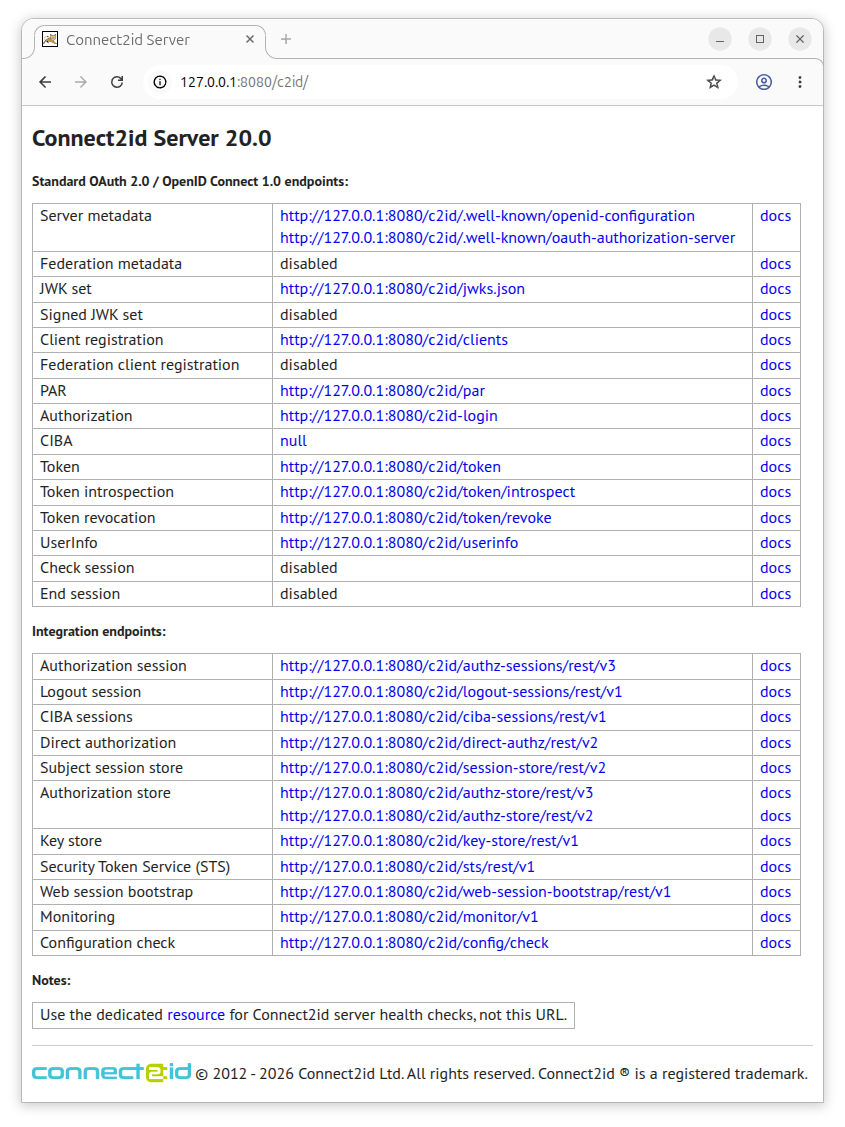
Open the Connect2id server’s base URL in your browser:
You will see a page, listing the standard OAuth 2.0 / OpenID Connect endpoints, along with and web APIs for integrating UIs, management and monitoring tools.
Step 4. Test a login
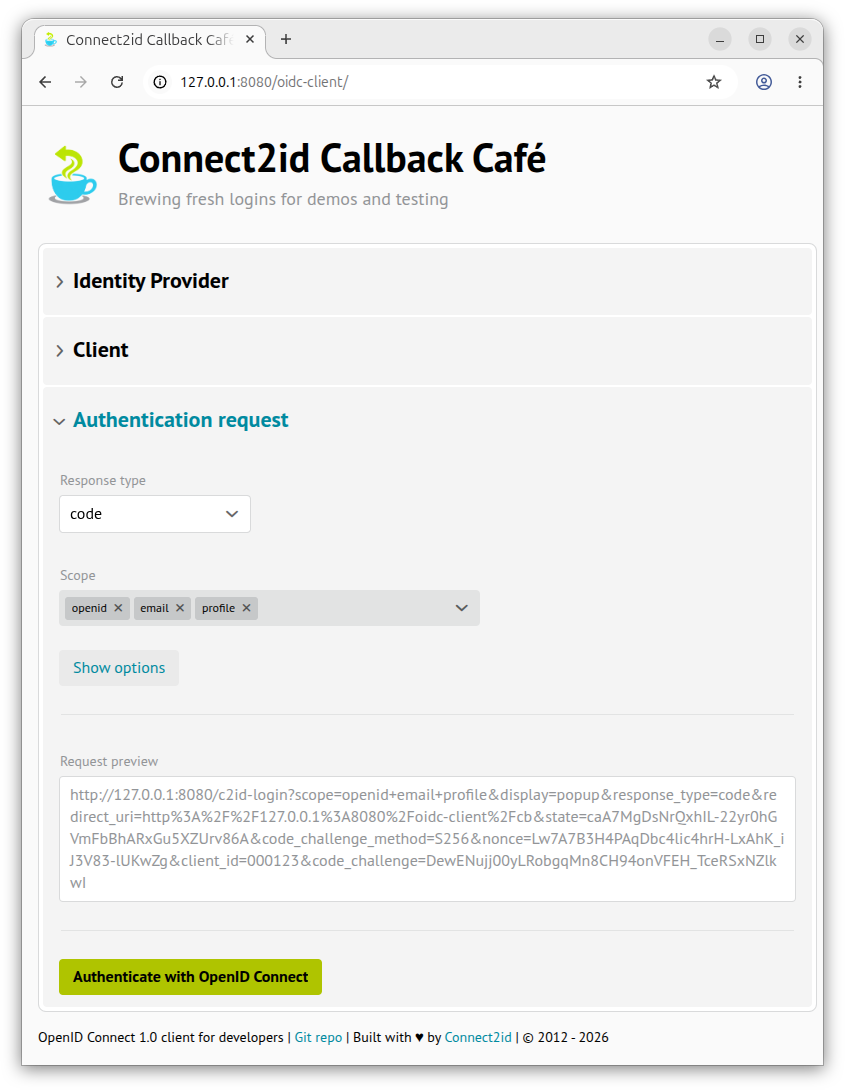
Launch the demo OpenID Connect client to test user authentication and profile retrieval with the Connect2id server:
http://127.0.0.1:8080/oidc-client
Docker
A Docker image for the demo Connect2id server is also available.
Questions or comments?
Get in touch with Connect2id support.